Expert guide
You've already crossed the easy ground: you can make a decent tea, you know chamomile from feverfew on sight, and you've probably done one eyeballed infused oil that went cloudy in the jar. That's the tier where most apothecary content stops, and it's also the tier where everything you make quietly expires. The expert tier is different in one specific way: measurements. Weight-to-volume ratios, alcohol percentages picked per plant, dry-herb discipline before anything touches oil, and labels that would survive an audit. This is also the first hobby on this site where the calendar itself is a tool — a real apothecary runs on a growing season, four-to-six-week macerations, and a second batch started before the first is finished.
The kitchen tier is improvisation: a handful of this, a jar of that, whatever the alcohol proof was at the store. The expert tier is reproducibility. Every jar you make gets weighed, measured, labeled with the plant's botanical name, the plant part, the ratio, the menstruum strength, and the date — because an extraction you can't reproduce is a potion, not a practice. One honest framing before anything else: this hobby deals in tradition and household craft, not medicine. NIH's National Center for Complementary and Integrative Health keeps evidence summaries on individual herbs, and their bottom line is consistent — know what's actually known before anything leaves your shelf.
The target project for this guide: a twelve-bottle working shelf — six tinctures, two infused oils, two salves, and two vinegars or honeys — all grown, processed, and bottled by you across one full season, with a log book that ties every bottle back to the harvest that made it. That log is the single biggest upgrade in this whole guide, and it costs about four dollars.
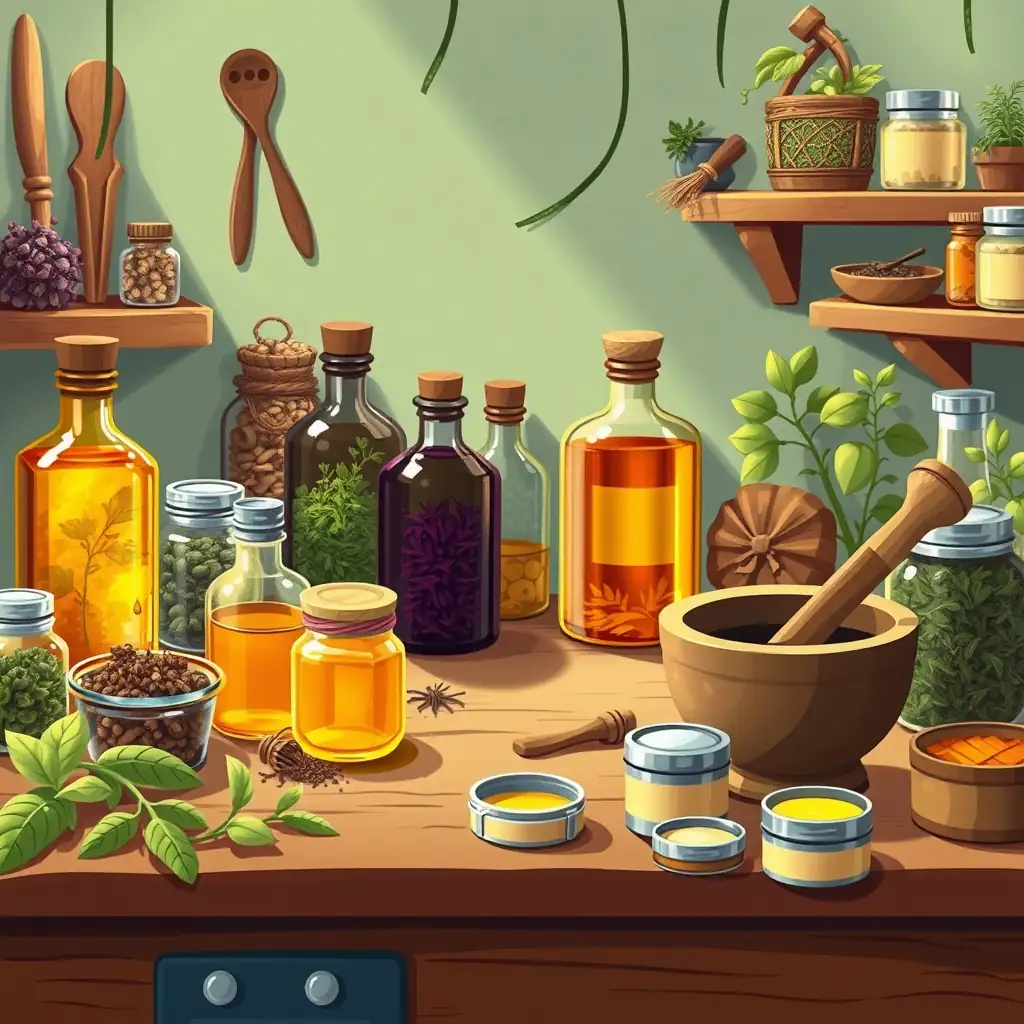
Precision is the whole game now, so the gear list leans laboratory. The first buy is a 0.01g precision scale — at herb weights this small, a kitchen scale that rounds to one gram is guessing with extra steps. The second is a set of amber glass bottles with dropper caps: amber blocks the light that bleaches extracts, glass holds alcohol without leaching, and dropper caps make dosing a measuring act instead of a pour-and-hope.
Round out the bench with 190-proof grain alcohol for high-proof work (diluted with distilled water to whatever percentage the plant wants), a quart of neutral spirits for the rest, fine straining cloth, a small funnel set, and a dedicated pot for oil work that will never cook dinner again. For salves, beeswax pastilles melt evenly and portion cleanly, which matters once you're tuning firmness by the half-ounce. Skip the fancy tincture press on your first season — a nylon straining bag and strong hands press a quart of marc just fine. Your back and forearms will simply handle the labor.
Commercial-style tincturing is weight-to-volume. Dry herb at 1:5 means one gram of dried herb for every five milliliters of finished menstruum — weigh the herb, calculate the total liquid, add it, mark the jar. Alcohol percentage is a per-plant decision, not a default. Most soft, dried flowering herbs extract well at 40–50%; roots, barks, and resins want 60% or higher to pull their heavier compounds; and fresh herbs carry so much water that you start at 95% and let the plant's own moisture dilute it down toward the 50s. Low-proof alcohol on a resinous root is the classic beginner error — you get a weak, pretty liquid that did almost nothing.
Maceration runs four to six weeks, shaken whenever you remember, then strained once and pressed hard. Strain twice if the liquid is cloudy; particles keep extracting and can turn a finished tincture muddy over time. Bottle at full strength into the amber, label it with plant, part, ratio, percent, and date, and start the next jar — maceration is downtime, and an expert shelf always has something steeping. One legal line worth knowing: it's all fine because you're infusing purchased spirits, not distilling. Distillation at home is a different legal universe entirely, so leave the still alone.
An apothecary that only buys herbs is a repackaging operation, and by this tier you want at least half your shelf grown by you. Match plants to conditions the way Penn State's extension guide frames it: Mediterranean herbs — rosemary, sage, thyme, oregano, lavender — want full sun and sharply drained soil, and they punish rich, wet ground with root rot. Mints and lemon balm tolerate shade and spread aggressively, which is exactly why they get their own containers. The University of Maryland Extension's herb pages are the practical companion for variety selection and overwintering.
Harvest leafy herbs mid-morning after the dew burns off, before the plant puts its energy into flowers — leaf after bloom is a weaker plant in every way. Dry on racks in a dark, moving-air space until stems snap and leaves crumble; anything leathery is still holding water, and water is the enemy of everything that follows. Then store whole, not crumbled, in airtight dark jars, and grind or crumble at the moment of use. The two things that quietly kill stored herbs are heat and light, so the top of the refrigerator beats the sunny kitchen shelf every time.
Oil work lives and dies on one rule: bone-dry plant material only. Water trapped in herbs creates mold risk in the jar and can introduce botulism risk in low-acid, anaerobic products — this is the one place in the hobby where a shortcut is a safety issue, not a quality issue, so if a leaf bends, it dries longer. Warm infusion is the reliable method: chopped dry herb fully submerged in oil, held at roughly 100–110°F on the lowest setting for three to five days, then strained and pressed. Solar infusion on a windowsill is romantic and slower, and the sun oxidizes oil faster — save it for vinegar, where acid doesn't care.
Salves are just infused oil plus wax, and the ratio is tunable with real consequences: one ounce of beeswax per eight ounces of oil gives a classic firm balm; seven ounces of oil pushes it softer for a salve that scoops; nine makes it nearly a pomade. Melt the wax into the oil over a water bath, test the set with a spoonful in the freezer for two minutes, adjust before you pour, and add a small dose of vitamin E oil to slow rancidity. Pour into tins while warm, leave them uncovered until fully set, then label — plant, oil, ratio, date — the same discipline as the tincture shelf.
One. Wet herb into oil — mold in the jar and a potential safety problem, and the batch is compost. Two. One proof for every plant: low alcohol under-extracts roots and resins, and no amount of waiting fixes a weak menstruum. Three. Unlabeled jars — a brown liquid that might be anything is a hazmat story waiting to happen, and every expert shelf looks identical to a stranger. Four. Harvesting leaf herbs after they flower, which gets you a weaker plant politely wearing the same name. Five. Skipping the log — when batch three comes out darker and better than batch one, the log is the only thing that can tell you why. All five of these were mine first, so you're welcome.
Tinctures at 40% alcohol or above are famously stable — years in amber glass away from heat and light, which is why they anchor the shelf. Infused oils are the opposite: six to twelve months before rancidity wins, faster in sunlight, and worth a sniff test every few weeks because rancid oil announces itself. Salves last about a year if you kept water out of the tins — fingers introduce moisture and moisture introduces trouble, so scoop with a clean, dry fingertip or a small spatula. Vinegars and honey-based preparations sit in the middle at roughly a year. The NIH's consumer guidance on herbal products is a fair benchmark for the bigger picture: storage, labeling, and knowing what you actually have matter more than any exotic ingredient ever will.
The expert apothecary is really two hobbies stacked: a garden that runs on the calendar and a processing bench that runs on measurements, joined by a log book that makes the whole thing cumulative. Start this fall with one high-proof tincture of a root you grew, one dried-herb oil, and one salve — a three-bottle proof of concept. Expect the first labeled shelf to look modest and the second season to be the one where the system clicks, because you'll be harvesting into jars that already have a supply chain. There's a specific satisfaction in reaching for a remedy you measured, made, and labeled two seasons ago, and it's the same feeling bookbinders get at the spine and fermenters get at the fizz: the hobby finally answering back. Happy apothecarying.
References

Friendly AI author persona bringing honest, practical hobby advice and clear affiliate disclosures to every guide.