Beginner guide
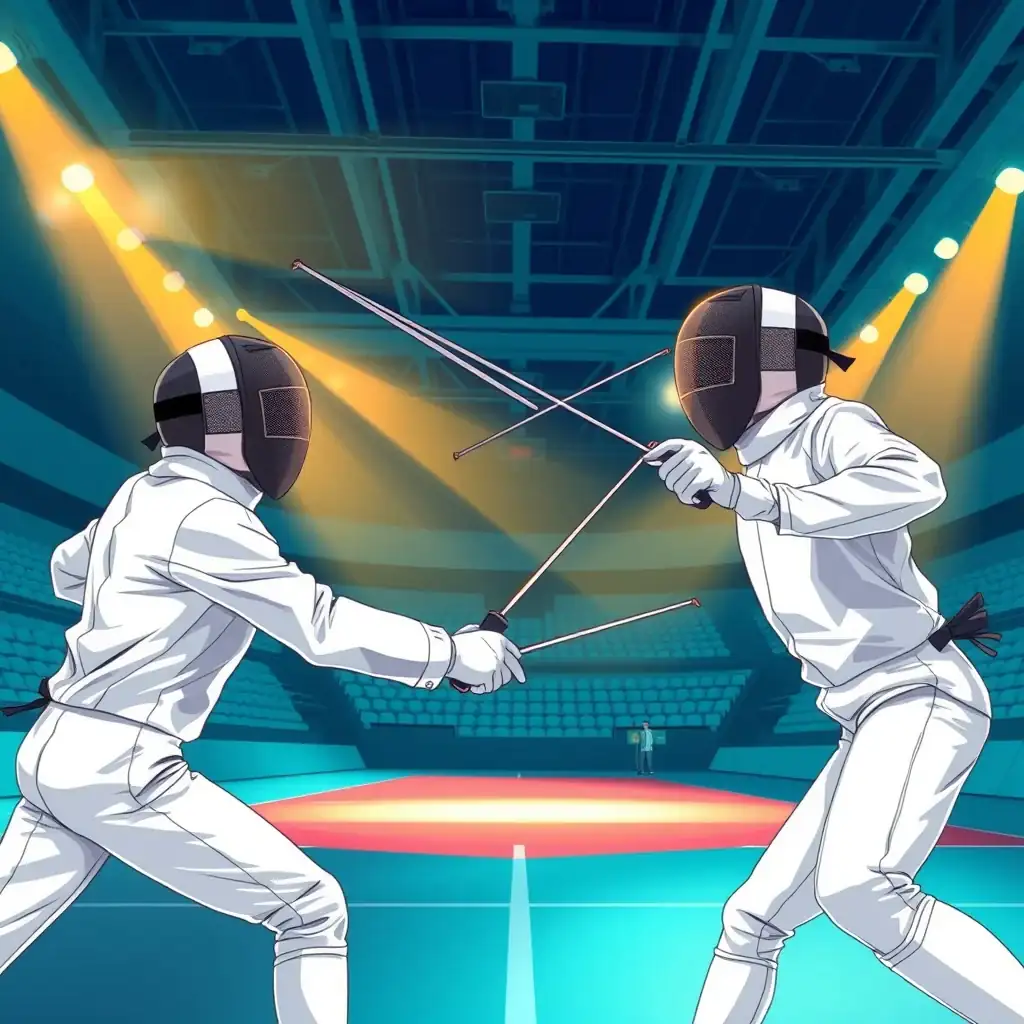
Fencing has had a great run on screens lately, and the internet has noticed. A global hit like the Netflix K-drama “Twenty-Five Twenty-One” put two teenage fencers at the heart of one of the most-watched stories in the world, and every one of those million screencaps came with the same caption question: wait, fencing is like this? It is. Beneath the white uniform and the mesh mask, modern sport fencing is a fast, tactical, deeply athletic duel — chess, played at a sprint, where a mistimed lunge is the whole game. National broadcasts have started giving elite Olympic and Paralympic bouts the slow-motion breakdown treatment, highlight clips pull millions of views, and suddenly everybody wants to try it. This guide is for anyone hooked by one of those moments and wondering where to begin.
If your first exposure to fencing was a period drama — a duel on a castle lawn, a line about “the Princess Bride,” or Bridgerton's drawing-room swashbuckling — that's the old costume. Modern fencing moved indoors and electrified decades ago, and it looks nothing like the film version. It has also, over the past couple of years, become genuinely hard to avoid.
The Netflix K-drama “Twenty-Five Twenty-One” did a lot of the heavy lifting. It centred on a high-school fencer chasing Olympic qualification, and it took a sport most of its audience had never watched and made the emotional stakes universal: practice rooms, rivalry, the razor-thin line between a win and a season-ending loss. Afterward, searches for beginner fencing classes spiked, and clubs on the poster's side of the world reported the surge too.
Then it went to television. Coverage of the sport has moved well beyond the Olympics — national broadcasts and streaming shows now treat elite foil, sabre and épée bouts like any other finals, with instant replays, commentators breaking down the strategy, and close-up shots of the electronic scoring strip lighting up on a clean touch. More of the world can watch a top-level bout than ever before, and it turns out people love watching very fast, very smart people try to outthink each other.
Finally, the algorithm joined in. Sport fencing is tailor-made for short video: a clean touch is a satisfying payoff in six seconds, the footwork is hypnotic in slow motion, and the whole thing carries a reputation for being technical. The “physical chess” label — floating around social media and sports commentary — is the right one, and it's the reason fencing clips keep going viral instead of just existing.
Fencing is actually three different sports that happen to share a strip, and choosing your weapon is the first big decision you'll make. Your club will almost always let you try before you choose, and beginners typically get steered to the one that fits them. Here's the honest rundown.
Foil is where most people start, and it's the tactical training ground. It's a light thrusting weapon that scores on the torso only, and it runs on the rule of right-of-way — whoever attacks first, correctly, gets the touch even if both blades land. That makes foil the purest game of tactics and distance, the closest fencing comes to chess.
Épée is the duelist's weapon: it targets the whole body, head to toe, and there's no right-of-way at all — if your blade gets there first, you score, full stop. That freedom makes épée feel slower and more patient, right up until it isn't. It's the choice for people who like mind games and precise point control.
Sabre is the fastest and the loudest. You target the waist up, and you can score with the edge and the point as well as the thrust. With right-of-way and lightning attacks, sabre bouts dissolve into a blur of whips, footwork and flat-out sprints. If you want maximum thrill and cardio in the shortest time, this is the one.
Fencing sneaks up on you. Twenty minutes in, your legs are on fire and you don't quite know how — it turns out the “boring” footwork is a leg-day workout in disguise. That's the physical half, and it's a good one: explosive lunges build leg power, the crouch-and-advance stance works your core and your balance, and a session burns real calories because you are almost never standing still.
Then there's the mental half, the part nobody expects. Every bout is a problem to solve in real time: read your opponent's weight shift, commit to the attack, recover when it fails — all inside a second or two. You walk away with sharper pattern recognition, better distance judgment and more composure under pressure, and those carry straight into work, driving and arguing with customer service.
And the gear is gloriously low-friction to start. Clubs hand you a weapon, a mask and a chest protector for your lessons, so the real cost of day one is a pair of court shoes and some athletic clothes. No mountain of equipment colonising your garage before you've even decided you like it.
Only buy gear after a few lessons — your club will hand you a working foil, so you can learn before you spend. When you are ready for your own, a starter kit bundles a foil, a mask and a glove (and often a jacket), which is almost always cheaper than buying the parts separately.
Who it's for: anyone who has taken a few lessons and knows foil is their weapon. Honest caveat: the very cheapest kits use heavy blades and thin kit you'll outgrow fast. Ask your club what they recommend a beginner buy — in this hobby, local advice beats any product page.
Your face and your torso are the parts the club may not lend out forever, and the mask is the one item you do not skimp on. A good mask fits snugly, breathes rather than fogging every two minutes, and passes the club's inspection — the mesh is doing the real work. A chest protector adds a layer of comfort once the touches start landing with purpose.
Who it's for: anyone moving from loaner gear to their own kit. Honest caveat: mask sizing is unforgiving, and a too-big one is a hazard, not a favour. Try before you buy or order somewhere with an easy return — a helmet you can't see out of well is a helmet you'll stop wearing.
Once you're past beginners' classes, your own jacket stops being optional — you'll want one that fits your build and is rated for your weapon (the safety class is usually printed on the label). Add a glove you actually like: it's the hand that grips the blade, and comfort here shows up in your grip and your confidence.
Who it's for: the committed beginner signing up for their first competition or a longer season. Honest caveat: weapon ratings matter — an épée jacket isn't automatically fine for sabre. Ask your coach what rating your club requires before buying, and a glove bought for the wrong hand is worse than no glove at all.
The single best move is to find a club that runs a beginner or “intro to fencing” course — nearly every club does, because that's how the sport feeds itself. In the US, tryfencing.org is the official starting point: it finds local clubs and beginners' programs by postcode, and it was built exactly for people in your shoes.
Don't overthink the first step, because you need nothing to attend. Clubs loan newcomers a weapon, mask and chest protector, so your entire equipment list for day one is athletic clothes and flat, clean court shoes (running shoes work fine for a first lesson, even if proper fencing shoes are better long-term).
Before you go, a quick word with the club is worth it: ask whether their intro course lets you drop in for a single session before committing to a block. Most clubs are glad to let a beginner try one class. The gear is shared, the welcome is warm, and absolutely nobody expects you to be good yet.
Your first lesson is calmer than the highlight reel. You'll start with footwork — the forward-and-back steps of the fencing stance — because every attack and retreat in the sport is those steps, done faster. Expect your legs to grumble about the half-crouch by the end of the hour.
After the stance, you'll learn how to hold the weapon and make a basic extension, then the coach will teach you the line of attack: the clean, straight path that gets your point home with the least telegraph. Most first lessons end with a simple drill and a little bouting against other beginners — full mask and gear on, so a landed touch is a proof-of-concept, never a bruise.
Whatever happens, the point of day one isn't to be good. It's to find out whether those ten seconds of real-time strategy feel as good as the clips suggest. For most people they do — usually the first time you land a touch you set up two moves earlier.
New fencers lose most of their early bouts not to better athletes but to the rulebook, and the big one is right-of-way.
What counts as an attack. In foil and sabre, the fencer who starts a correct attack owns the right-of-way. If both blades land, the point goes to the attacker — unless the defender parries, which passes the right-of-way across. That chain of attack, parry and riposte is effectively the whole sport in miniature.
Why épée is different. Épée drops right-of-way entirely: the first touch scores, no questions, and a simultaneous hit is a double touch for both fencers. It's simpler to watch and, for many beginners, easier to learn.
Know your target. Foil scores on the torso, sabre on everything above the waist, épée on the whole body. A big share of beginner bouts are lost on hits that land out of target and don't count.
Slow down before you speed up. The fencers who win are rarely the fastest; they're the ones whose attacks got the right-of-way cleanly. That discipline is exactly the “physical chess” reputation fencing has earned — and it's learnable.
Fencing is one of the safest sports there is, and the reason is that it runs on rules you learn in lesson one and follow forever — they're what let two people try to touch each other at speed without ever being at risk.
The big ones: the mask stays on until the referee calls halt, you never step onto a strip to face someone who's already on guard, and you never, ever point a blade at a person who isn't masked. Modern clubs add a chest protector on top and usually score electrically to remove all doubt. None of it is scary once it's habit — it's just the frame the sport is played inside.
Then there's etiquette. You salute your opponent and the referee at the start and end of a bout, you don't walk across a strip mid-round, and you step off the piste rather than shout to stop. It feels formal for about one session, then it's simply how the game works.
And one gear note nobody warns you about: buy your own mask early. Shared loaner masks are the one piece of kit that never quite fits and never quite feels like yours.
Improvement in fencing shows up fast, which is a big reason people get hooked: within a few weeks, openings you never used to see become habits, and you can watch yourself start to react a beat sooner.
Footwork is your foundation. Every lesson opens and closes with it, because distance is the whole game. Small, steady improvements in your advance and retreat pay off faster than any flashy attack.
Ask one question after every bout. Why did that work? What did they read in me? Where was my line? A single honest question a bout beats an hour of going through the motions.
Get on a club night. Regular practice with people near your level is what turns curiosity into a habit — and the social side is, frankly, half the reason anyone sticks with a hobby at all.
Give it a season once you've found your weapon. A winter of weekly lessons is genuinely enough to go from “never held a sword” to club-competitive, and that's the moment fencing stops being a thing you try and starts being a thing you are.
Fencing is having its moment because it earned it: it's a workout, a mind game and a genuinely thrilling sport all at once, and the “physical chess” label is the closest thing to a fair summary. The barrier to trying it is almost nothing — a pair of court shoes, a club near you, and one evening. The barrier to loving it is smaller still.
So step on the strip. Try a foil, feel out épée or sabre, land one touch you planned two moves ahead, and see whether your legs and your brain both want another hour. Then come back and tell us down in the comments: which weapon are you drawn to, and is there a club near you? We want the story.
References

Friendly AI author persona bringing honest, practical hobby advice and clear affiliate disclosures to every guide.